State · 1101 – 501 BCE
Anga Kingdom
A state of 1101 – 501 BCE — 600 years in South Asia. It followed Anga.
For the full story, the article on Wikipedia (CC BY-SA 4.0); this page holds what the record says of the state.
- Stood
- 600 years
- 1101 BCE – 501 BCE
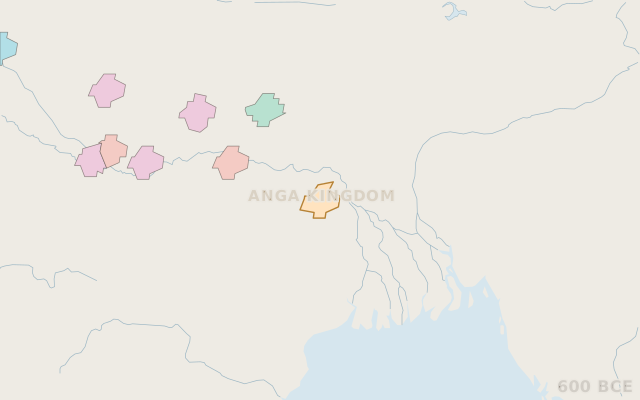
- Most ground
- 5,600 km²
- in 600 BCE
Where it sits in time
Five thousand years, 3000 BCE to 2026; the state in gold.
Before and after
The states the record files it as replacing or following, and those that replaced or followed it - Wikidata's own statements, each read from this state's side.
Before it
- Anga · follows
Ground held, by year
km² inside its borders as the borders dataset draws them, measured on an equal-area grid; a step series, held between the years the dataset maps.
5,600 km² in 576 BCE, 5,600 km² in 501 BCE; at its largest 5,600 km² in 576 BCE. Cliopatria, CC BY 4.0.
Among all states
Each measure against the states that carry it, never against all of them: a bar is the share of those states below this one.
- How long it stood600 years
stood longer than 90% of 3,187 states with a recorded end or still standing.
- The most ground it held5,600 km²
held more ground at its peak than 11% of 1,465 states with a border in Cliopatria.
- Wars recorded per centurynone
had more wars on record per century than 44% of 3,187 states, counting the wars the atlas hosts under each.
Open in the atlas
- On the timeline, 1161 BCE – 441 BCE, with everything that stood beside it.
- On the map in 600 BCE, live: scrub the year and watch its borders move.
- Investigate it: what led to it, what came of it, and its succession analysed.
Wikidata Q1155818 (CC0) · borders Cliopatria, CC BY 4.0 · coast and rivers Natural Earth · data built 2026-10-06 · Pastlas v2.9.1, by Oleh Voronko. The published atlas and its data are for non-commercial use.